Fællestræning med fokus på tilbagetrædningen. Foregår i uge 39 i Facebookgruppen HER

Shoulder-In and Haunches-In

Shoulder-in and haunches-in are essential exercises in every rider’s and horse’s training, regardless of riding style. Both exercises help teach the horse to shift its weight onto the hindquarters and develop suppleness and strength.
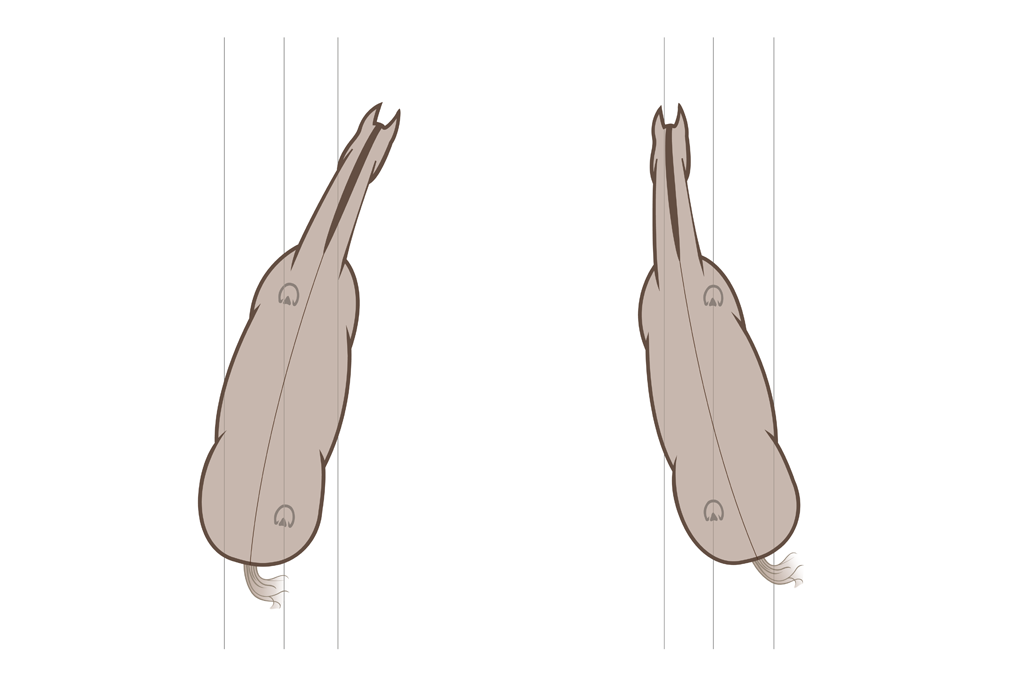
Understanding the Two Exercises

The initial challenge in learning to understand shoulder-in and haunches-in is that we often try to grasp everything all at once. This frequently raises a host of questions:

  • What do the exercises look like?
  • Which muscles does the horse use?
  • What aids should I use?
  • How should my position be?
  • How can I tell if the horse is moving with quality?
  • How do I transition from one exercise to the other?
  • And so on, and so on…


If we try to comprehend everything at once, we are likely to give up before we even begin. There is simply too much information and too many details at the same time.

Here, I will try to explain what a shoulder-in and a haunches-in are at their core.

Understanding the Terms Shoulder-In and Haunches-In

When learning to distinguish between the two lateral movements, shoulder-in and haunches-in, it’s easy to feel uncertain about which is which in the beginning.

The shoulder-in is referred to as “shoulder-in,” meaning the shoulders move inward. The haunches-in is called “haunches-in,” meaning the hindquarters move inward. These terms give us a hint about what the horse needs to do. In the shoulder-in, the forehand moves inward, while in the haunches-in, the hindquarters move inward.

What Is a Shoulder-In?

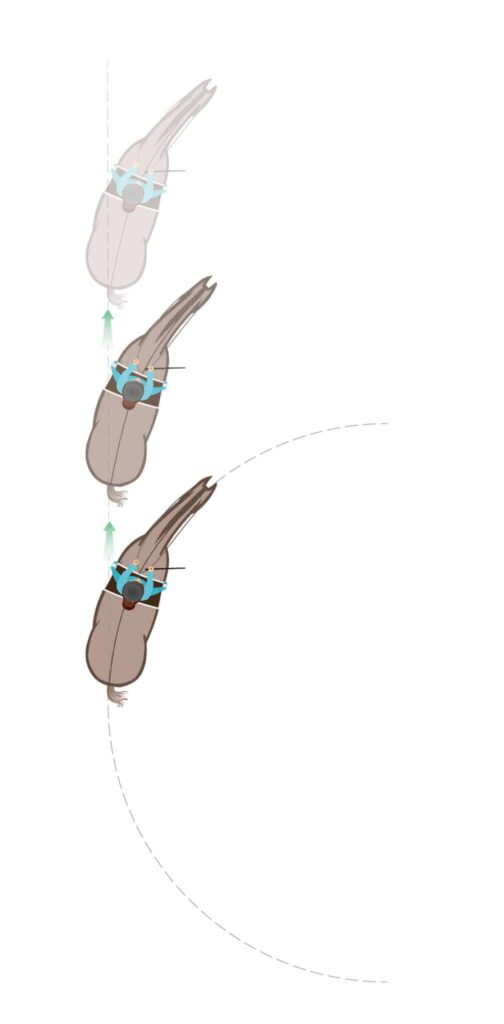
In the shoulder-in, the horse is softly bent through its entire topline and moves on three tracks. The shoulder-in can be performed on both straight and curved lines.

On a straight line, the hindquarters remain on the track while the forehand moves slightly inward, off the track. When the horse moves on three tracks in the shoulder-in, the inside hind leg steps under toward the direction of the outside foreleg.

In the shoulder-in, the horse’s forehand and head are angled toward the opposite long side of the arena. The horse is therefore looking in a direction different from the direction of movement, requiring it to lightly cross its forelegs to move laterally.

The Purpose of the Shoulder-In

In the shoulder-in, the horse steps the inside hind leg under its body toward the outside foreleg. This movement pattern strengthens both lateral flexion (the soft bend through the entire topline) and vertical balance (equal weight distribution on both forelegs). The lightly crossing forelegs also help the horse relax through its shoulders and forehand.

This helps the horse:

  • Learn to shift its weight onto the inside hind leg
  • Stretch into the outside aids
  • Learn to trot in a relaxed and balanced manner


An Alternative Way to Remember the Shoulder-In

Imagine a 12-14 meter circle starting on the long side. Picture your horse walking on the circle, following its curvature, with its nose positioned directly above the circle and its hooves tracking evenly—one forehoof and one hind hoof on either side of the circle.

As your horse reaches the track, it continues into the circle with its forehand, and this is where the shoulder-in begins. If your horse continues the shoulder-in along the track, it maintains the bend and keeps the forehand slightly inside the track.

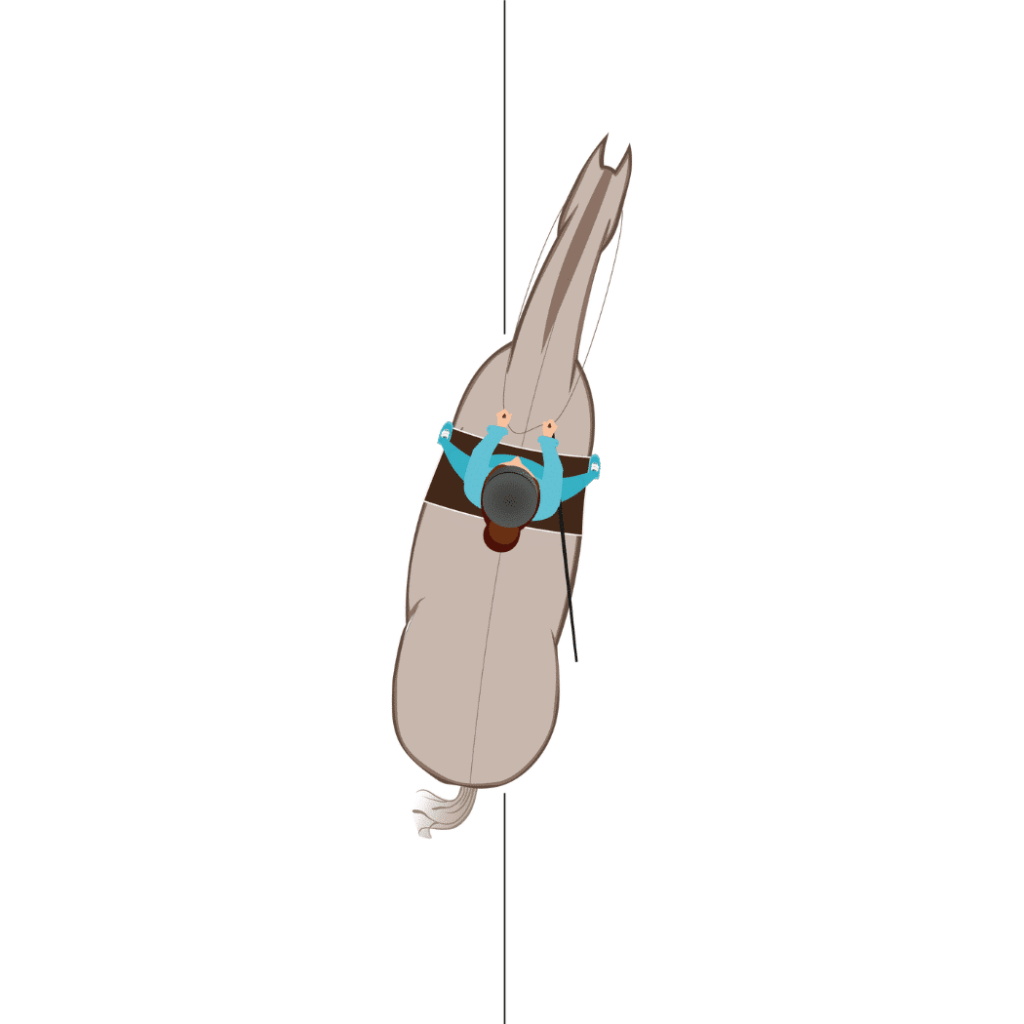
When your horse is balanced and carries equal weight on both forelegs, you maintain the forehand’s position with the outside rein while using a light pressure with the inside leg to encourage the horse to continue in the shoulder-in. Sit evenly over your horse, with equal weight on both seat bones. Rotate your upper body so your shoulders align with the horse’s shoulders, and your hips align with its hips. This means your inside hip is slightly forward compared to your outside hip.

If your horse is unbalanced, it will place more weight on the inside foreleg, and you may find yourself needing to push it sideways with the inside rein. This highlights the importance of ensuring your horse understands your cues, allowing you to help it find balance in the shoulder-in.

What Is a Haunches-In?

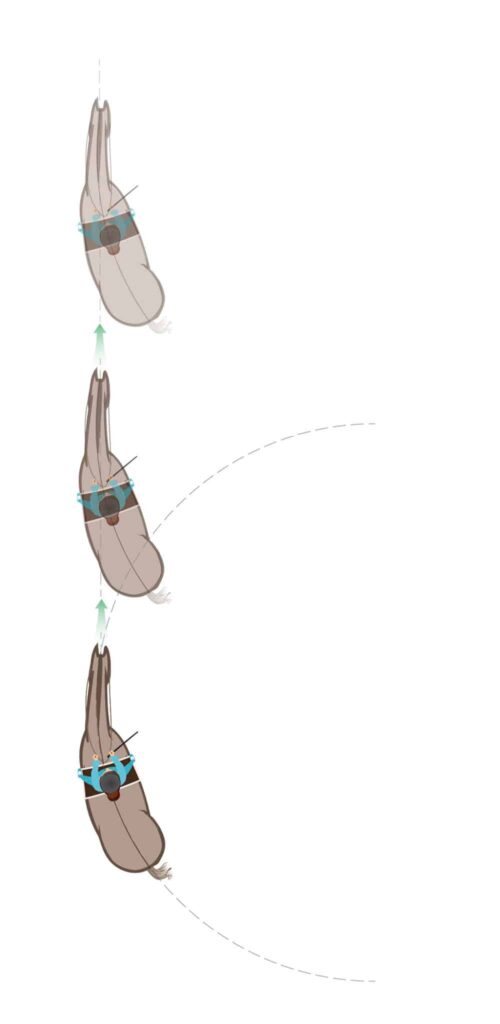
In the haunches-in, the horse is also softly rounded through its entire topline and moves on three tracks, just as in the shoulder-in. The haunches-in can be performed on both straight and curved lines, and if the circle becomes small enough, the haunches-in transitions into what is called a pirouette.

On a straight line, the forehand remains on the track while the hindquarters move slightly inward, off the track. When the horse moves on three tracks in the haunches-in, the outside hind leg steps under the body toward the inside foreleg.

In the haunches-in, the horse’s forehand and head point in the direction of movement, meaning the forelegs move straight forward while the hindquarters shift inward.

The Purpose of the Haunches-In

In the haunches-in, the horse steps the outside hind leg under its body toward the inside foreleg. The challenge lies in ensuring the horse holds its outside hip back while stepping the hind leg forward under its body, maintaining the bend toward the inside.

Holding the hip back in the haunches-in is not natural for the horse in walk or trot, but it is inherent in the canter, where the horse naturally moves with a haunches-in motion. In canter, the outside hind leg steps under the horse, lifting the forehand up and forward.

This movement helps the horse:

  • Learn to shift weight onto the outside hind leg
  • Maintain a bend to the inside
  • Canter in a relaxed and balanced manner

An Alternative Way to Remember the Haunches-In

Imagine again a 12-14 meter circle starting on the long side. Visualize your horse walking on the circle, following its curvature with its nose positioned directly above the circle and placing one hoof on either side of the circle.

As your horse reaches the track, its head points straight ahead along the wall while its hindquarters remain inside the circle—this is where the haunches-in begins. If your horse continues in the haunches-in along the track, it maintains the bend, moving forward with the forehand on the track and the hindquarters slightly inward.

When your horse is balanced and maintains the bend to the inside, you hold the forehand steady with the inside rein while using a gentle pressure with the outside leg to keep the hindquarters inward.

In the haunches-in, you sit evenly over your horse with equal weight on both seat bones. Rotate your upper body so your shoulders are parallel with your horse’s shoulders, looking straight through your horse’s ears. Your hips should align with your horse’s hips, with your inside hip slightly forward compared to your outside hip.

If your horse is unbalanced, it may only bend at the neck and step sideways with a straight back. You might find yourself needing to hold firmly with the inside rein to push the shoulder out, causing the horse to step excessively sideways, with the outside hind leg moving past its center of gravity. This highlights the importance of ensuring your horse understands your aids so you can help it achieve balance in the haunches-in.

Common Features of Shoulder-In and Haunches-In
  • In both exercises, the horse is softly rounded through its entire body.
  • Both exercises can be performed in all three gaits, or four if riding a gaited horse.
  • They can be executed on three or four tracks (targeting different muscle groups).
  • Shoulder-in and haunches-in can be performed on both straight and curved lines.
  • The rider’s position remains consistent in both exercises: The rider’s shoulders are parallel to the horse’s shoulders, and the rider’s hips are parallel to the horse’s hips.


The purpose of both exercises is to teach the horse to shift its weight onto the carrying hind leg.

Viewing the Exercises from Different Angles

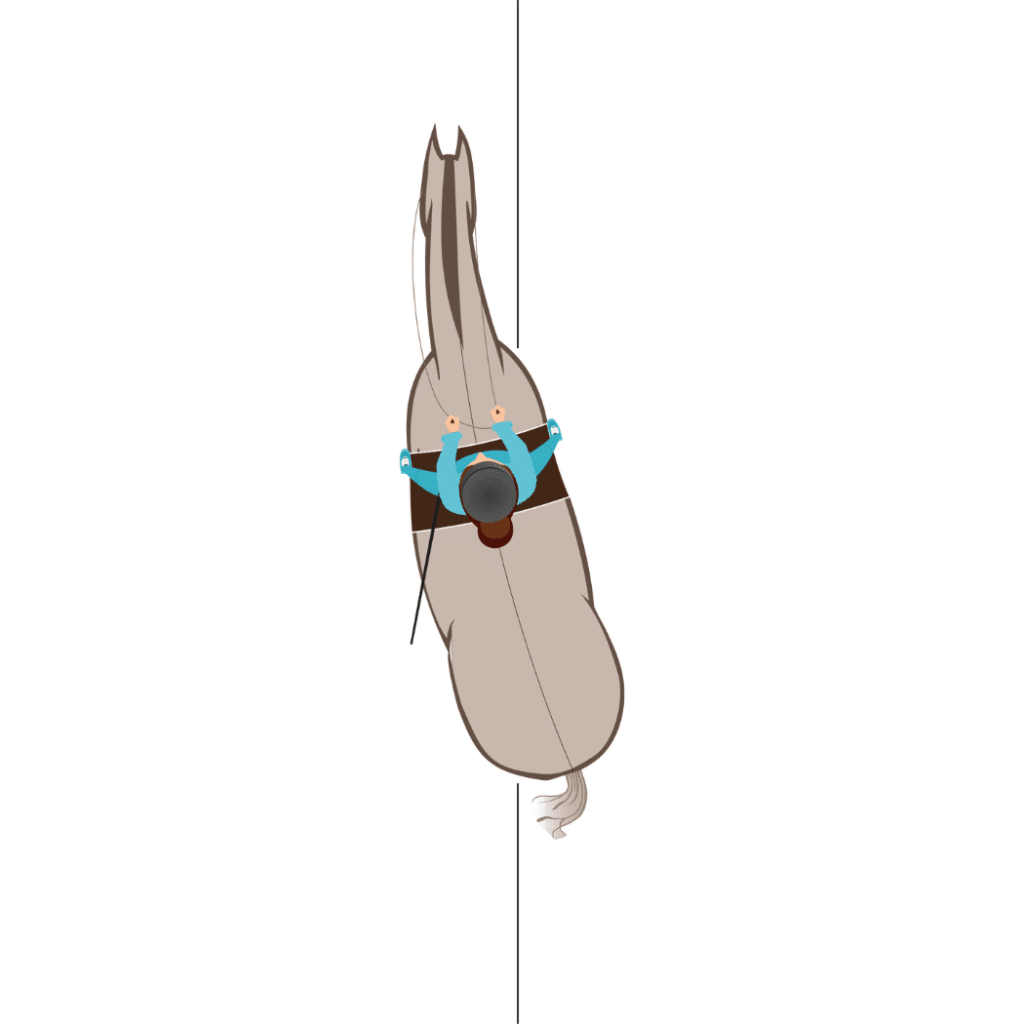
Learning to recognize shoulder-in and haunches-in requires practice in observation. Watching the exercises from various angles—such as from the center of the arena, on a circle, or along the centerline—can help you develop a clear understanding of the horse’s position in each movement.

In the shoulder-in, observe that the horse’s head and forehand point away from the direction of movement, with the inside hind leg stepping under. In the haunches-in, note that the horse’s head and forehand point in the direction of movement, with the outside hind leg stepping under.

Why These Two Exercises Are Essential

Training both shoulder-in and haunches-in is crucial for a well-rounded and balanced education for your horse. These exercises complement each other and contribute to various aspects of the horse’s physical and mental development:

  • Promotes symmetry and balance: Shoulder-in and haunches-in target different sides of the horse’s body, encouraging even muscle development and improved balance. Like humans, horses often favor one side, leading to asymmetry and imbalance. Regular practice ensures both sides are equally strengthened and developed.

  • Improves lateral suppleness: Lateral suppleness refers to the ability to move smoothly sideways. Shoulder-in focuses on moving the forehand inward, while haunches-in targets the hindquarters. Together, these exercises enhance the horse’s ability to bend and move laterally, which is fundamental for advanced dressage and overall movement quality.

  • Develops strength and flexibility in the hindquarters: A strong, well-developed hindquarter is essential for the horse to carry itself and the rider correctly. Both exercises require the horse to shift weight onto the hind legs, strengthening the hindquarters and improving self-carriage.

  • Enhances responsiveness to aids: Shoulder-in and haunches-in demand precise communication between horse and rider. Regular practice increases the horse’s sensitivity and accuracy in responding to the rider’s aids, fostering a better partnership.

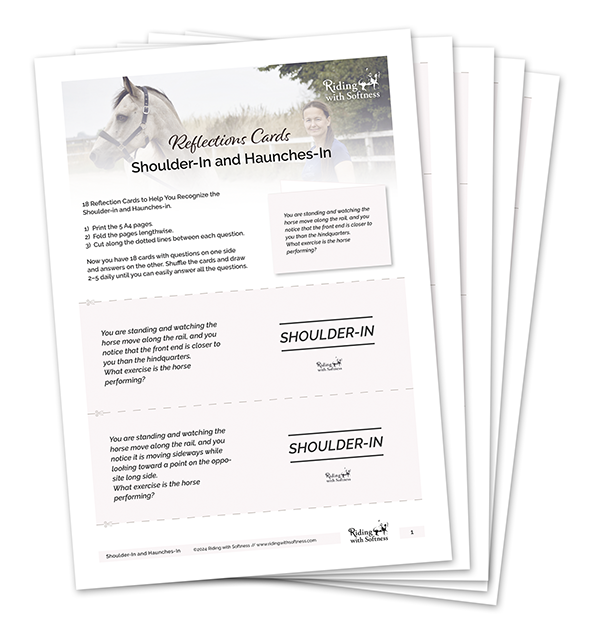
Do you need to train your eye? Then you can download my Reflection Cards below: