
Fællestræning med fokus på tilbagetrædningen. Foregår i uge 39 i Facebookgruppen HER

Thoughts on the canter — and how to support our horse the best way

For many of us, the canter is a point in training where we either experience success or frustration. Some horses pick up the canter easily and effortlessly, while others struggle with balance, become tense, or lose rhythm.

When this happens, it can be tempting to try to “fix the canter” directly — to give more support, hold on a bit tighter, and use more effort. But often, the canter is simply a reflection of the education and preparation we have established in the lower gaits.

In this post, I’d like to share my thoughts on the two paths to the canter — how we can determine whether our horse needs to learn the canter through relaxation and forward movement, or whether the path goes through collection and balance work. And most importantly: how the choices we make in training can either help build up our horse — or stand in the way of the development we are aiming for.
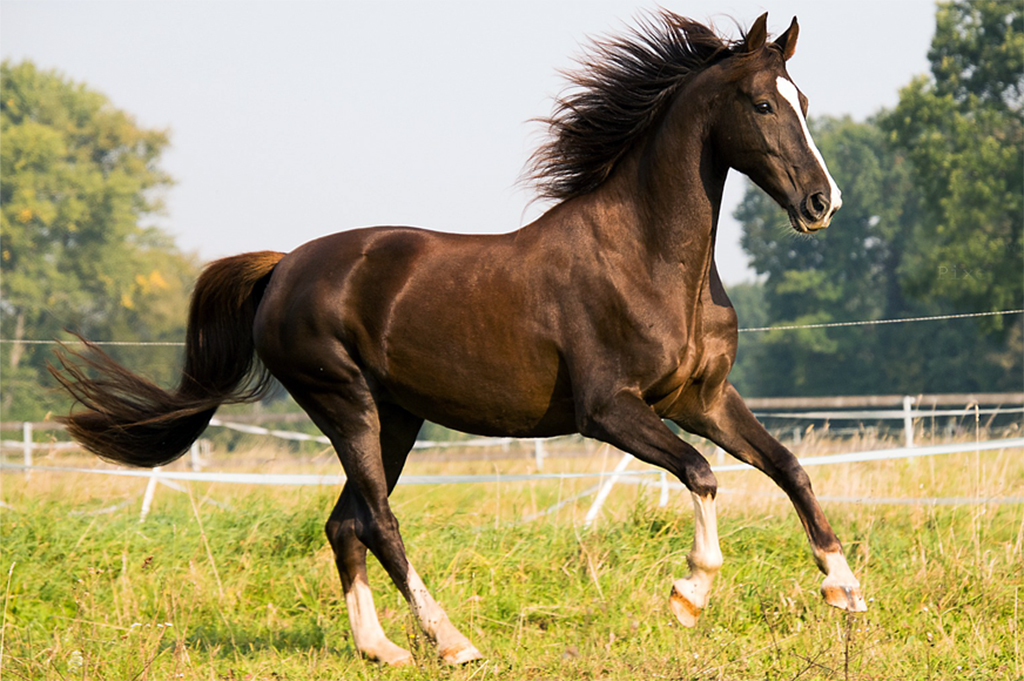
There Are Two Paths to the Canter

👉 The physically uncomplicated horse can fairly quickly learn to stretch forward and down on the lunge line. Here, we teach our horse to find balance on the circle — to bend, stretch forward and down, and follow the circle, first in walk, then in trot, and finally in canter.

When our horse understands balance from the ground, we can transfer that understanding to riding. I ride on a loose rein and only correct with one rein at a time. My goal is first to teach my horse to maintain its own balance in a calm and steady rhythm 💫. If the horse never learns this, we end up having to constantly support and carry it — and that creates tension and insecurity. It becomes a negative spiral that we want to avoid at all costs.

👉 The physically more complicated horse needs a different path. In this case, we work further along in the horse’s education before we introduce the canter. We teach the horse to find balance in walk and trot, and we work with shoulder-in and haunches-in (travers), where the horse seeks forward and down and then into collection.

When the horse understands that it can shift its weight onto the hind legs without tensing its back or shortening its neck, we can begin to teach it to strike off into canter from travers.

In travers, the horse is already bent to the inside, and the outside hind leg steps toward the center of gravity — exactly as it does in the canter. We start with just a few canter strides and gradually build from there. The more steadily and collected the horse can canter, the more we can begin to give it a longer frame with larger, freer strides 🌿🐎

When the Road Feels Long — But the Shortcuts Don’t Exist

The path through collection can sometimes feel long. It requires patience, care, and small, consistent repetitions. And even though it can be tempting to use more force, hold tighter, and offer constant support, that will never teach our horse to move with relaxation and elasticity. In fact, quite the opposite happens.

When we rely on force, tension, and constant support, we risk training our horse away from the goal we truly have: a light, self-carrying, and happy horse. Instead, the horse learns to go with a short neck and a hollowed back — and it begins to move with stiff, short strides. It may look “controlled” on the surface, but it is an unhealthy movement pattern that increases the risk of injuries and tension.

And most importantly: the horse will never truly progress in its education, because the foundation we are building on is one of resistance and compensation. Real development only happens when the horse is allowed to find its own balance — with a soft mind and a relaxed body. When it feels that it’s not being forced into a frame, but allowed to grow into it, gradually and at its own pace.

So even though it may feel like a long journey — it’s really the only road that will lead to the goal 🐎💛

Is Tension a Symptom?

That is the question I always ask myself. If my horse moves in balance in walk and trot on the lunge line — it bends, follows the circle, and moves rhythmically forward from my position and the light contact of the lunge line — but struggles to canter, then it may be a sign that the horse needs help from a skilled bodyworker or therapist. There may be tension, asymmetry, dental issues, or hoof problems standing in the way.

But if I see that my horse already lacks balance in walk and trot, struggles to follow the circle, and does not respond to my light signals, then the problems in the canter are “just” a symptom. In those cases, I don’t try to fix the canter directly — instead, I return to the missing foundation!

I work systematically in the walk: teaching my horse to bend softly into a light contact, teaching it to make smooth transitions to halt without losing balance, and then transferring that to the trot. Once that foundation is in place, the challenges with the canter often disappear on their own — without us ever having to “fight” with them 💛

Let’s Not Fix the Symptoms with Force and Control

If we try to push our horse into something it’s not ready for, we risk creating more insecurity and tension. Our horse needs time, a sense of safety, and small moments of success.

That’s why my best advice is this: pause, take a few — or even ten — steps back, and build your horse up at the pace it needs. When you do that, you create a happy, self-carrying, and proud horse — and with practice, the canter will begin to feel light, free, and effortless 🌸🌿🐎

Enjoy Your Training

Many of us are already striving to ride with light aids, and we do our best not to support or hold too much. Still, it can sometimes sneak in — we end up helping more than we realize, simply because it feels like a natural part of “supporting” our horse.

But if we dare to be curious and allow ourselves to feel and reflect, we may discover that even small adjustments in our approach can give our horse more calmness and confidence. When we let go of the need to constantly correct and control — and instead build balance and understanding through patient work with collection — our horse begins to find its own strength and lightness.

This is where we start to see the back lift, the strides become longer and more elastic, and the canter feels free, effortless, and safe for both horse and rider.

It may take time, and it requires us to trust the process. But the path through collection — step by step — creates the strong and relaxed horse we all dream of sitting on ❤️🐎🌿

"Real development only happens when our horse is allowed to find balance on its own."

A Little Reflection for Your Own Training:

✅ Does my riding feel light — both for me and my horse?
✅ Can my horse balance through transitions without me constantly holding or supporting?
✅ Have my corrections become fewer over time?
✅ Do I give my horse space to think and find solutions on its own?
✅ Do I choose the calm path through balance and collection — even if it takes a bit more time?

If you recognize yourself in any of these questions, remember this: even small adjustments can make a huge difference over time. And it’s in those small, conscious choices that we help our horse move in a healthy way, with relaxation in the body and joy in the mind 💛