
What Should a Young Horse Know Before Being Backed?
Backing a young horse is an art that requires more than just riding skills. It’s a process that involves patience, understanding, and a deep insight into your horse’s behavior and needs!
Backing a young horse is an art that requires more than just riding skills. It’s a process that involves patience, understanding, and a deep insight into your horse’s behavior and needs!
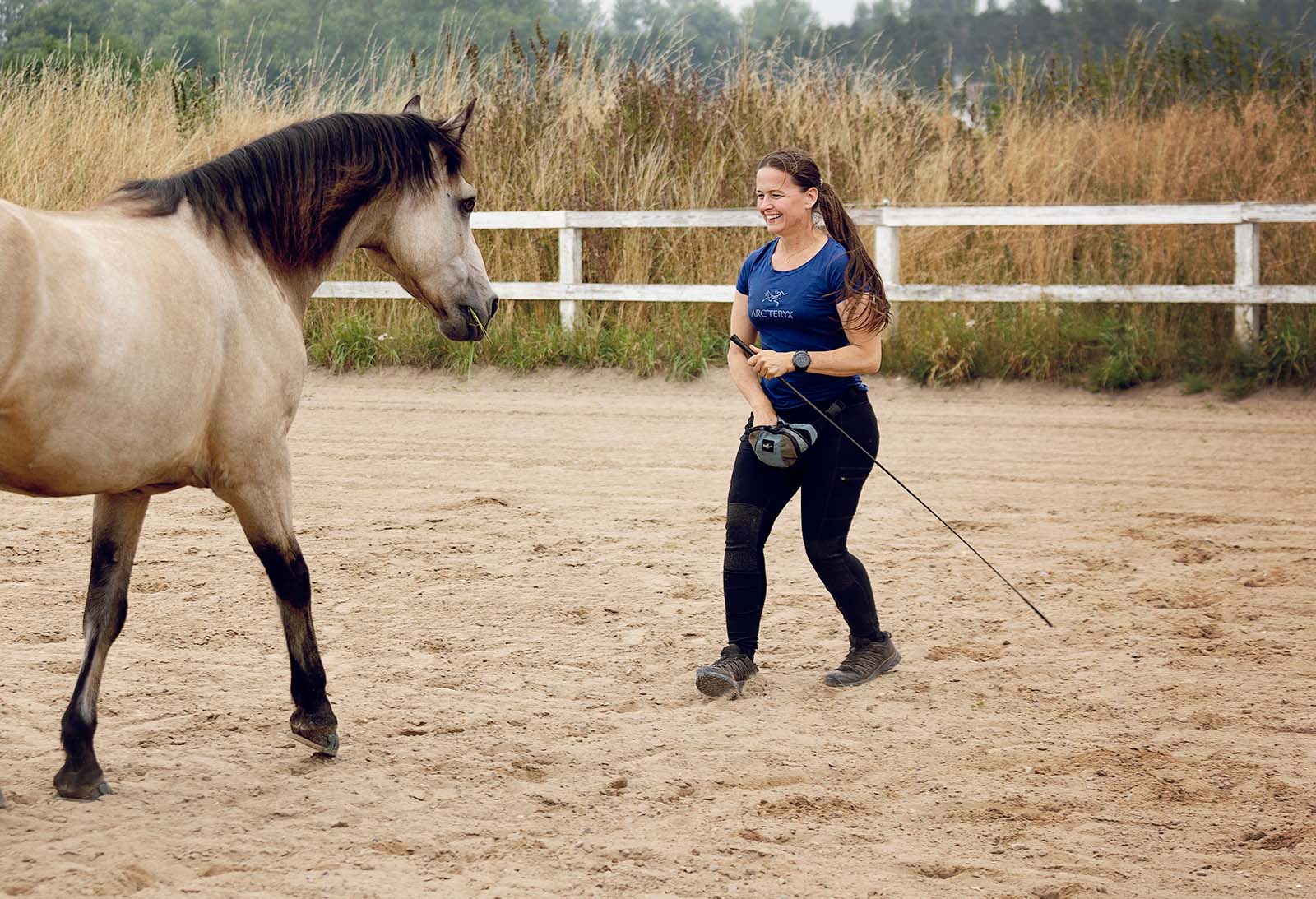
Many horse owners choose to take on the task of starting their horse themselves, either due to a personal desire to build a unique bond with their horse or because they can’t find a trainer they trust. But what exactly should our young horse be able to do before we begin the backing process?
Preparing a young horse for backing can be compared to a school education, where we start with the most basic skills and gradually build upon them. Above all, it is essential that our horse learns to understand and trust us!
Before we sit in the saddle, there are important steps to take to ensure that our horse is both physically and mentally prepared.
By introducing one signal at a time, it becomes easier and more realistic for our horse to understand exactly what we are asking for. Most importantly, the horse learns to move in physical and mental balance.
We can’t directly teach our horse to move in balance, but by asking it, for example, to take one step with its hindquarters and then stopping or backing it up when it loses balance, the horse will eventually expect to halt after the first step. Over time, this will lead the horse to begin moving in balance.
Lunging and Balance Work: Lunging is a crucial tool in the preparation for backing a horse. It allows us to work with our horse’s gaits—walk, trot, and canter—while teaching the horse to balance and respond to cues without the rider’s weight.
Building Muscles and Flexibility: The muscles along the horse’s back and hindquarters need to be strong and flexible enough to support and balance the rider’s weight. Exercises that promote muscle development and flexibility are essential during this stage.
I often see horses being backed without much groundwork beyond learning how to lunge, but what’s the real issue with that?
The challenge is that our horse often maintains its balance by tensing its neck to some degree. When the horse isn’t relaxed and stretching forward and down, it presses its chest down, preventing the back from lifting properly.
If we send our horse out on the lunge line, without further preparation, to teach it to walk, trot, and canter—as we often do before backing—the horse will lean onto the inside foreleg, worsening its tension and imbalance.
When we then teach the horse to carry a rider, it will naturally start with a raised head and neck. Due to the rider’s weight and position close to the forehand, this will shift even more weight onto the horse’s front end.
In contrast, the tension in the horse’s neck can make it relatively easy for us to teach the horse to follow the rein because the tension creates a certain stability in the body. We often also find it easy to get the horse to trot in a stable rhythm, but this is because the horse is tensing its back and taking short strides.
When we try to teach a tense horse to canter, we typically encounter balance issues, with the horse speeding up—especially in the corners—and requiring heavy rein contact to control the pace. This further shifts the horse onto the forehand.
In the beginning, when the horse hasn’t learned to relax and move in balance, the tension gives us the illusion of stability. However, that’s because the horse’s movement is stiff and short, and it will take a long time to regain suppleness and flexibility. This is why it’s so important to ensure high-quality groundwork—not just for our own sake, but especially for the well-being of our horse!
When we train our horse, the mental aspect of training is just as important as the physical! When our horse is in mental balance, it learns more easily because it is relaxed and focused.
Handling Stress and Challenges: Our horse needs to learn how to handle stressful situations and unexpected challenges. This includes exposure to new environments, sounds, and objects in a way that builds trust and confidence.
Patience and Repetition: Learning takes time, and it’s important to adjust the pace to our horse’s individual learning capacity. Repetition and consistency in training help our horse understand and apply the skills it has learned.
How long the preparation takes varies greatly depending on how often we train, how ready our horse is, and what challenges or injuries it might carry from the past—and not least, how skilled we are at giving clear and consistent signals.
It can feel like a lot of work, but it often takes twice as long, or more, to retrain a horse if we start backing it without teaching it to move in balance and shift its weight onto the hindquarters. That’s because we not only need to teach new signals and exercises, but we also have to undo old habits and reaction patterns.
By laying a solid foundation through thorough preparation, we create the best conditions for successful training. It’s not just about teaching our horse specific skills, but also about developing a deep understanding and mutual trust between horse and rider.
A training method for the rider who wants to train their horse to move in balance with light aids, tailored to both you and your horse’s level, no matter what your training goals may be.